.png?width=173&height=70&name=Betty_RGB%201%20(1).png)
As I hit the nine-month mark on the Betty Customer Onboarding team, it felt like the right time to...
Launching Betty is an exciting milestone—but it’s only the beginning.
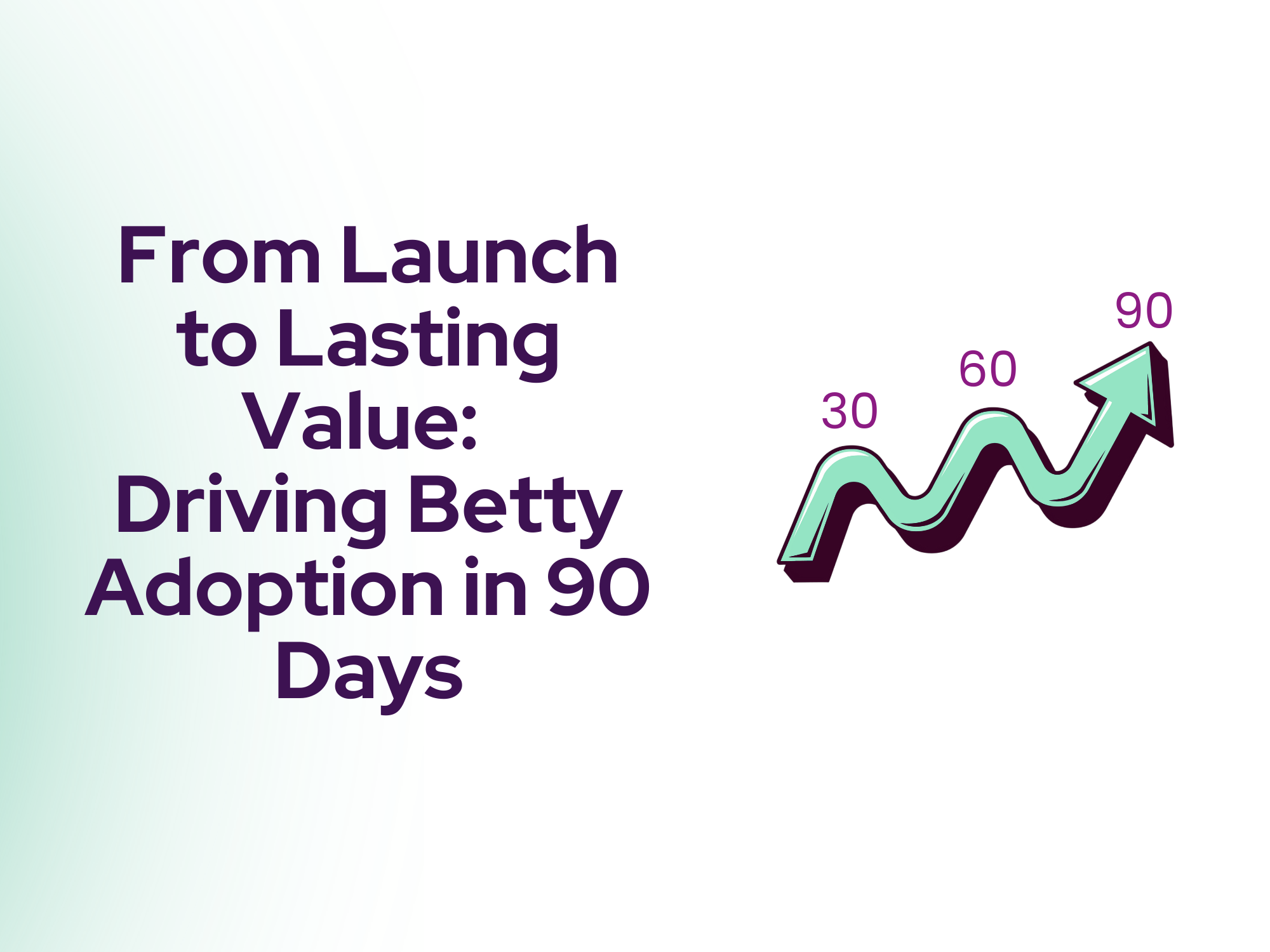
Real adoption doesn’t happen on launch day or after a single announcement. It happens over time, as users build habits, teams reinforce behavior, and Betty learns how to best support your organization’s work. The first 30–90 days represent the most important adoption phase—not because results must be immediate, but because this is when momentum is strongest, and expectations are shaped.
This is the window where Betty is positioned as more than a new feature. It’s where she becomes a trusted assistant that helps members and staff do their work better, easier, and faster, backed by your organization’s knowledge and best practices.
The 30–90 Day Adoption Window
The first few months after launch are unique. During this period:
- Users are most open to trying something new
- Teams are paying the closest attention to how Betty is used
- Real questions and usage patterns begin to emerge
- Feedback is freshest and most actionable
- Early wins can be reinforced and expanded
Adoption during this phase isn’t about achieving perfection. It’s about building trust, reinforcing behavior, and allowing Betty’s value to compound over time.
Early Days: Setting Expectations and Encouraging Exploration
In the early stages of adoption, clarity matters more than completeness.
Users are more likely to engage when they understand what Betty can help with today—and that she will continue to improve as she’s used. Setting that expectation early removes pressure and creates space for curiosity.
At this stage, successful organizations focus on:
- Clearly communicating what Betty knows and where she’s most helpful
- Sharing a few example questions users can try right away
- Inviting feedback and reinforcing that it directly shapes how Betty evolves
When users feel encouraged to explore rather than “test” Betty, engagement grows more naturally. This also helps position Betty not as a static knowledge base, but as a responsive assistant grounded in your organization’s expertise.
Building Momentum: Making Betty the First Place to Ask
As early curiosity turns into repeat usage, adoption becomes less about technology and more about behavior.
If users default to emailing staff or searching through documents out of habit, Betty remains optional—even when she’s effective. The next step is intentionally redirecting those moments and reinforcing Betty as the fastest, easiest place to start.
This is where Betty’s value becomes clearer and more differentiated. Beyond answering common questions, she can help users:
- Prepare for certifications or exams
- Navigate events, programs, or benefits
- Understand policies or requirements
- Surface the most relevant resources
- Get clarity on next steps
Organizations that reinforce these use cases early often see stronger momentum. For example, when the National Fire Sprinkler Association (NFSA) launched Betty, they invested in targeted demos that showed members exactly how and when to use their Betty, CHAT EOD.
Within the first 30 days:
- 508 users engaged with Betty
- 1,724 conversations were initiated
- Approximately 75% of first-time users returned within the first week and continued using Betty throughout the first month
These early signals weren’t about “full adoption”—they were about momentum. Clear positioning and consistent reinforcement helped establish habits that continued to build in the weeks that followed.
Turning Usage into Trust
As Betty is used more consistently, patterns begin to emerge. Organizations start to see what users rely on most, where Betty is helping the most, and where refinement is needed.
This is a critical moment to reinforce progress.
Sharing even small updates—expanded answers, clearer guidance, or improved recommendations—helps users to see that Betty is actively learning from real interactions. It also reinforces that their engagement matters.
When users understand that Betty evolves in response to how she’s used, trust deepens—and adoption becomes more durable.
Embedding Betty into Everyday Workflows
As adoption matures, the goal is normalization.
Betty should begin to feel less like a new launch and more like a standard part of how work gets done. This often looks like:
- Including Betty in onboarding and help resources
- Using consistent language internally (for example, “Have you checked Betty?”)
- Sharing early usage insights to reinforce value
When Betty is embedded into everyday workflows, adoption becomes self-sustaining—and her impact compounds over time.
What Adoption Success Really Looks Like
Success isn’t defined by a single metric or moment. Instead, look for signs such as:
- Consistent repeat usage
- Fewer basic, repetitive questions reaching staff
- Clear themes in what users ask Betty
- Teams referencing Betty naturally in conversations
These are the indicators that Betty is becoming a trusted assistant—not just a tool that was launched.
Adoption Is Built Over Time
Betty adoption isn’t driven by a single email or a single month. It’s built through intentional reinforcement over the first 30–90 days, when momentum is highest and habits are forming.
Set expectations clearly. Reinforce behavior consistently. Highlight progress visibly.
Do that, and Betty becomes more than a feature. She becomes part of how your organization works—and a meaningful extension of the value you deliver every day.
AI-Enabled Chatbots
,
Chatbots
,
Comparisons
,
Generative Chat
,
AI Technology
,
Associations
,
AI-first
,
Betty
,
Membership Value
,
Member Conversation
,
AI Marketing
,
AI for Associations
,
strategy